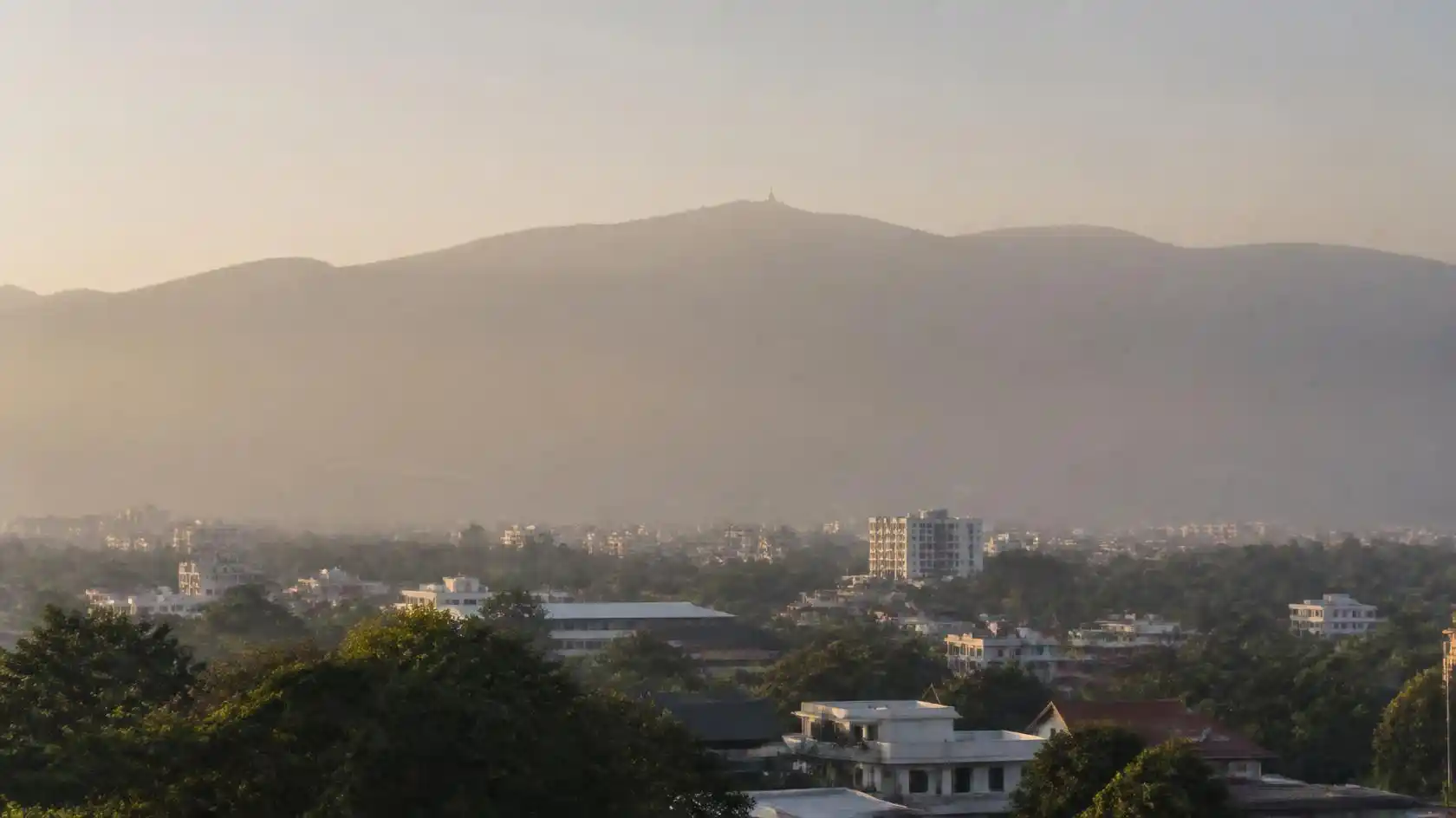

How Burning Season Shapes Buying a Home in Chiang Mai
Picture late February in Chiang Mai: the mountains that usually frame the skyline north of the city start to blur behind a soft grey haze, and the smell of smoke drifts in on a still morning. It is common enough that a lot of expats simply plan around it, heading south to the islands or Bangkok during the peak months and coming back once the air clears. For buyers weighing a home here, the honest question is not whether this happens, but how to plan for it — which districts tend to fare better, what a well-sealed house actually looks like, and where the science and the politics currently stand.
When Is Chiang Mai Burning Season, and How Bad Does It Get?
In 2026, PM2.5 exceeded 300 micrograms per cubic metre in some districts — around ten times Thailand's safety standard — and the city's AQI hit 231 by April 2, ranking Chiang Mai the world's second most polluted city that day. On April 4, the government declared emergency disaster zones across Chiang Mai, Lamphun and Phayao, and by April 7 the city was still ranked worst globally. Earlier in the season, on March 5, official Pollution Control Department readings put Chang Phueak at 72.6 micrograms per cubic metre, Suthep at 57.7, and the Old City around Si Phum at 50.3 — all in the orange, beginning-to-affect-health category, and all above Thailand's own standard of 37.5.
Much of the smoke comes from agricultural burning within the region, along with cross-border haze drifting in from Myanmar and Laos. On one representative day in early March 2026, monitoring agencies recorded 235 fire hotspots across 17 northern provinces. Chiang Mai sits in a valley, so on days without wind or rain, the smoke has nowhere to go — it settles rather than clears.
Local reporting during the worst weeks noted a rise in hospital visits linked to air pollution exposure. We are not medical professionals and this is not health advice — if air quality is a genuine concern for you or a family member, that is a conversation for a doctor, not a property listing. What we can speak to is the practical side: how the market has adapted, and what to look for in a home.
Outside this window, the picture is different. From roughly May through October, readings across most of the city sit close to World Health Organization targets, and the 2024 annual average for Chiang Mai was 26.4 micrograms per cubic metre — moderate, not hazardous. The mountains that disappear into haze in March are clearly visible again well before the rainy season ends.
Which Chiang Mai Districts Have Better Air During Burning Season?
| Area (Chiang Mai city) | PM2.5, Mar 5 2026 | Category |
|---|---|---|
| Chang Phueak | 72.6 µg/m³ | Orange |
| Suthep | 57.7 µg/m³ | Orange |
| Si Phum (Old City) | 50.3 µg/m³ | Orange |
Source: Thailand Pollution Control Department, reported by Nation Thailand. All three areas exceeded Thailand's own standard of 37.5 micrograms per cubic metre that day.
Chiang Mai University's own Climate Change Data Center runs a separate sensor network across the North, and its readings often show wider swings than the Pollution Control Department's official 24-hour averages — real-time monitors have recorded PM2.5 nearly double the government figure on the same morning, a reminder that "good" or "bad" can depend on which source you check. For a rougher sense of how the outer districts compare to each other over a full season, IQAir's historical station data is the most consistent public source we found:
| Outer district | March average PM2.5 | Cleanest month average |
|---|---|---|
| Hang Dong | ~108 µg/m³ | ~7 µg/m³ (Jun/Jul) |
| San Kamphaeng | ~90 µg/m³ | — |
| Mae Rim | ~88 µg/m³ | ~13 µg/m³ (Jun/Jul) |
| Doi Saket | ~42 µg/m³ (April peak) | ~8 µg/m³ (Jun-Aug) |
Hang Dong is often positioned as the breathing-room, yard-space suburb, but historical station data shows its March average running higher than Mae Rim's or San Kamphaeng's — likely because its valley-floor position sits closer to active agricultural burn zones, with less of a buffer from the surrounding farmland. San Kamphaeng and Mae Rim have posted somewhat lower averages in past seasons, and Doi Saket, further into the hills to the east, has recorded notably lower peaks. None of this is a promise that any single year will repeat the last one — a shift in wind direction or a heavy rain in March can change the picture for an entire district within days.
What Does a Well-Sealed, Filtered House Actually Look Like in Chiang Mai?
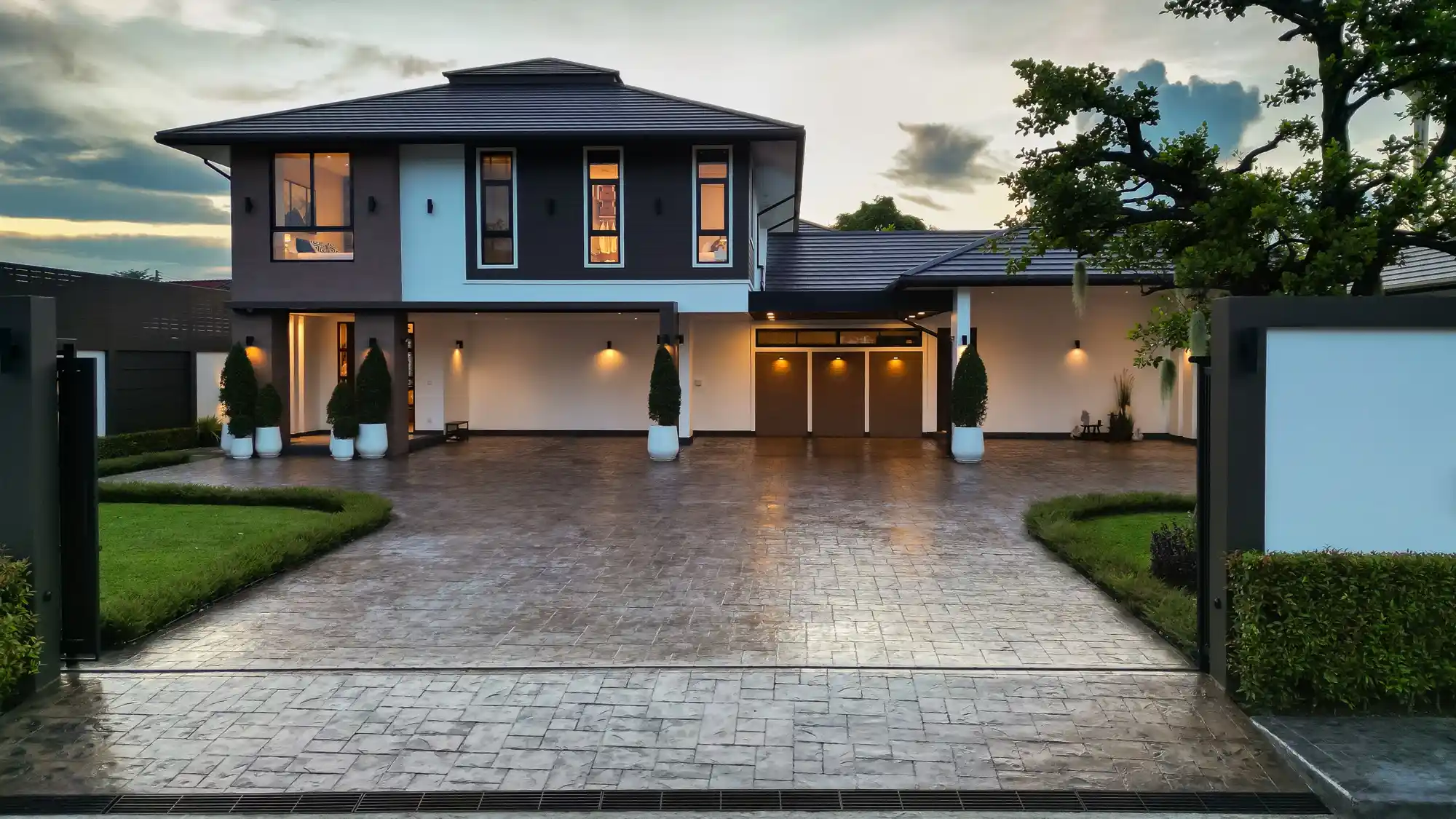
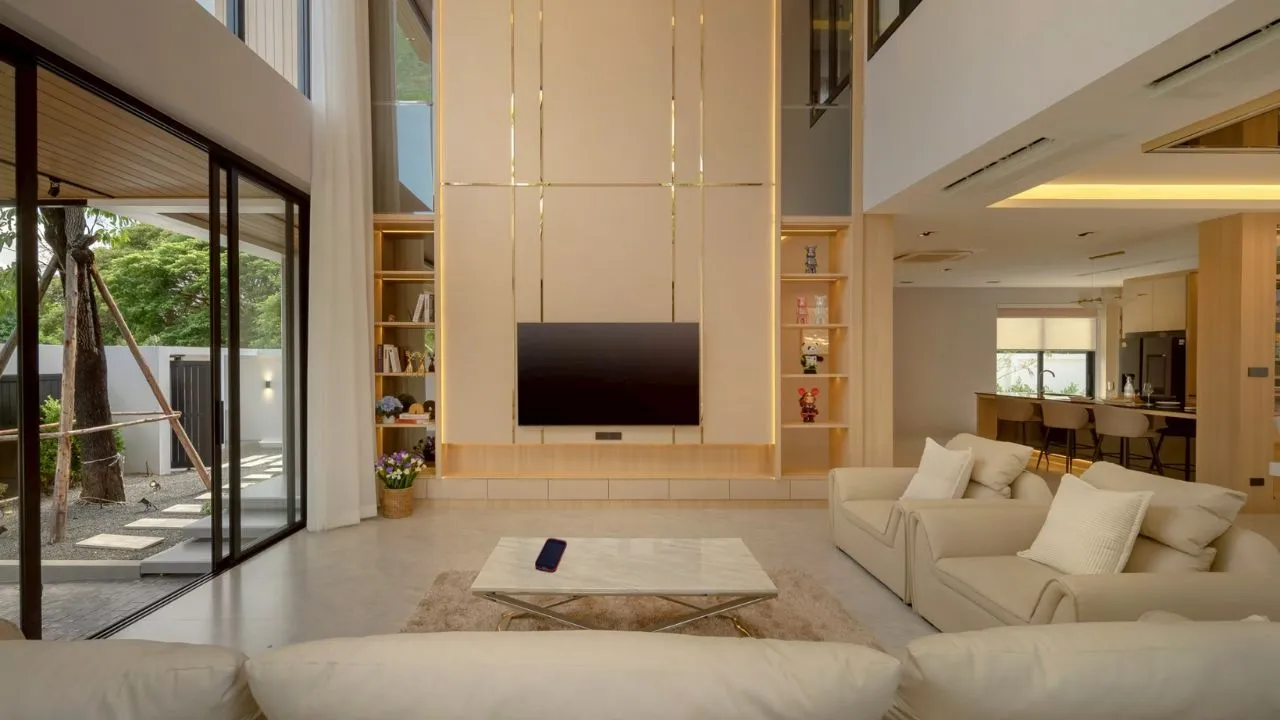
Newer Chiang Mai builds increasingly treat this as a structural question, not just an appliance one — better-sealed construction (some builders now use AAC block rather than standard concrete block, specifically for the tighter seal) paired with a dedicated filtration system, rather than a single portable purifier asked to do all the work. Worth asking about on a viewing:
- Sealed windows and doors, with minimal gaps around the frames
- A positive-pressure filtration system serving at least one main living space, not just a portable unit in a corner
- Whether there is a genuinely sealed clean room the household can retreat to on the worst days, similar to what some international schools have built for students
- For condos: which floor the unit sits on, and whether the building's central system handles filtration or each unit manages its own
- What a full burning season adds to the electricity bill, since filtration and air conditioning both run harder through February to April
For the construction side of this — wall materials, block types, and how newer builds are engineered for the dry season — see our guide to smart homes in Chiang Mai.
Is Thailand's Clean Air Act Going to Fix This?
The bill has a long history: it began as a citizen-led proposal from the Thailand Clean Air Network in 2022, was later consolidated with six other drafts from political parties and the Cabinet, and passed the House of Representatives unanimously. It was then suspended when Parliament dissolved in December 2025. The new Cabinet reintroduced it, and on May 17, 2026, the House voted 611 to 3 to send it to the Senate. The Senate then proposed amendments that MPs overwhelmingly rejected, and as of early September 2026 the bill sits in deadlock, with a joint committee of MPs and senators working to reconcile the two versions. Until it passes, this is a proposal, not a law.
In the meantime, the response has moved ahead of the legislation. Panyaden and Prem International Schools have built dedicated clean-air rooms with positive-pressure filtration for burning season. Central Pattana and Chiang Mai University's RIHES research unit launched a Share the Air campaign in April 2026, delivering thousands of DIY filtration units and hundreds of dust-free classrooms across the North. We have seen a similar shift in new housing, where filtration is increasingly treated as standard rather than optional — and in past seasons, tourism numbers have dipped noticeably during the worst weeks, which tells you something about how seriously the market as a whole takes this.
Who Should Weigh Burning Season Most Heavily Before Buying?
Families with young children or anyone managing a respiratory condition tend to feel it first, which is part of why schools like Panyaden and Prem invested early in clean-air infrastructure. Retirees and remote workers with flexible schedules are often the ones who adopt the seasonal pattern described above, treating February through April as a natural travel window rather than a reason to sell. Buyers who work fixed hours in Chiang Mai year-round, with no ability to travel during peak weeks, are the ones who benefit most from prioritising a well-sealed, filtered home over a marginally larger garden.
When does burning season happen in Chiang Mai?
Burning season runs roughly from February through April, driven by agricultural burning and dry-season conditions. The worst weeks typically fall in March, when PM2.5 readings regularly exceed hazardous levels.
Does a house need special filtration in Chiang Mai?
Many newer builds now include positive-pressure air filtration and sealed construction as a standard response to burning season. We have seen this become a genuine buyer priority, not a luxury extra.
Should burning season stop me from buying property in Chiang Mai?
In our experience, it should change how you buy, not whether you buy. Checking a property's building envelope, filtration, and district-level air data before purchase addresses most of the concern.
Thinking About a Property That Handles Burning Season Well?
Browse our current listings or get in touch and we will walk you through what to check before you buy.
.webp)
