
Hang Dong Chiang Mai: A Sub-District Guide for Families
In our experience, most families arrive having already chosen Hang Dong, and then find the district is far larger than they expected. Ten separate sub-districts, three international schools sitting at three different corners of it, and price bands that move by several million baht depending on which road you happen to turn down first.
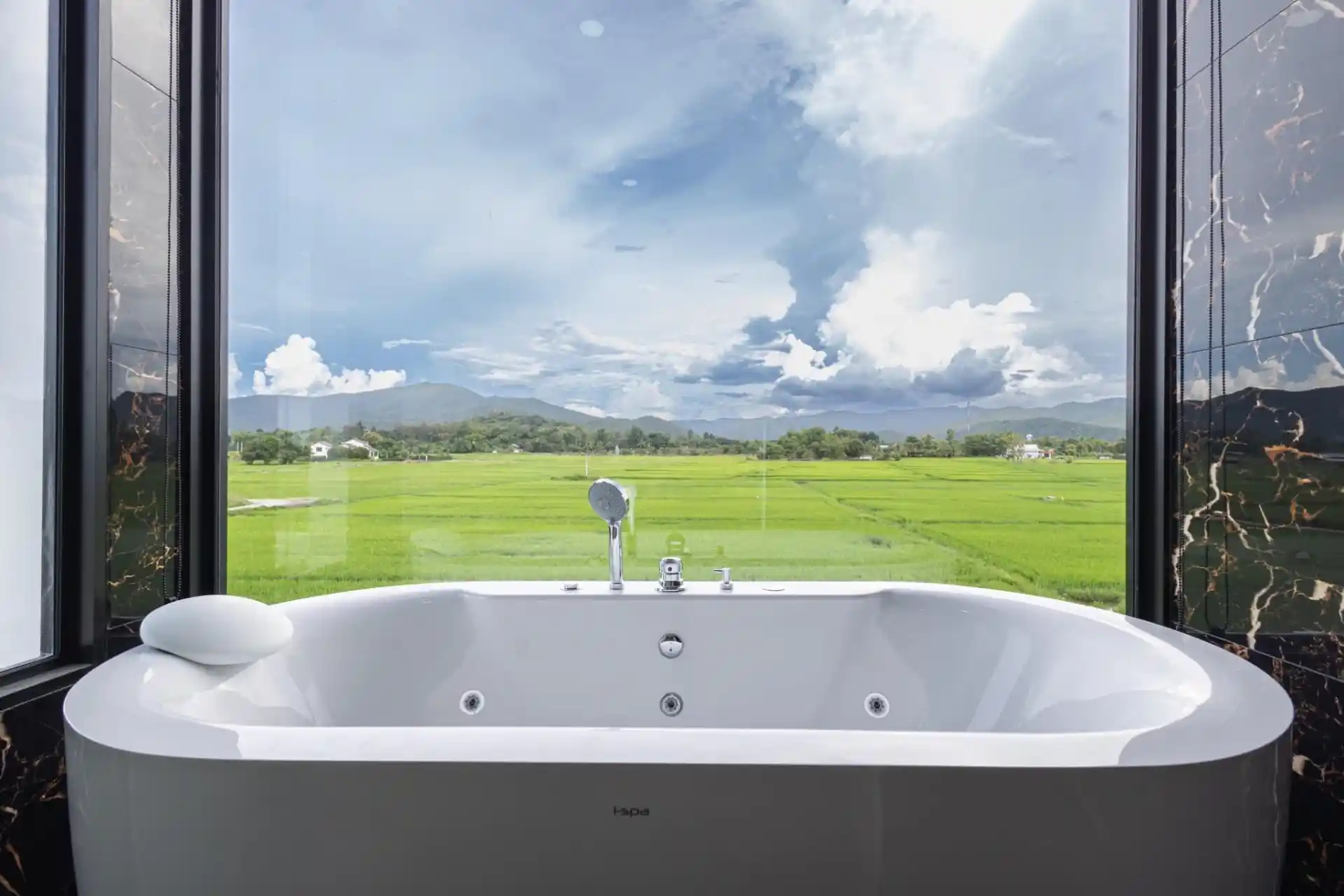
A family we worked with last year spent three weekends viewing houses in Hang Dong before realising they had been driving between places twenty-five minutes apart and calling it all the same neighbourhood. One villa backed onto rice fields with the Doi Inthanon foothills behind it. Another sat five minutes from a shopping village, on a road that carries school traffic from seven in the morning. Both were Hang Dong. Neither felt remotely like the other.
This is the guide we wish we could hand people before that first weekend.
Hang Dong spans ten sub-districts and they are not interchangeable. Panyaden sits in Nam Phrae, Lanna International in Ban Waen, and Grace International in Han Kaeo. Family houses run 6.8M to 15M THB, and pool villas from 10M to beyond 20M THB across the district.
Which part of Hang Dong should you actually live in?
There is no single correct answer, because the district has no single centre. We have observed that the decision almost always comes down to which school your child attends and how much you value quiet over convenience.
Hang Dong district covers ten sub-districts, or tambon. Most foreign buyers only ever hear about three or four of them, usually whichever ones their agent happens to have listings in. The practical differences between them are significant, and they are not reflected in the price alone.
One clarification worth making early, because it causes real confusion: Mae Hia is not part of Hang Dong. It sits in Mueang Chiang Mai district, immediately to the north. It is frequently grouped with Hang Dong in property marketing because it feels similar and shares the same school access, but administratively it is a different district. We cover it separately in our Mae Hia neighbourhood guide.
| Sub-district | Character | Typical housing | Anchor |
|---|---|---|---|
| Nam Phrae | Rice fields and foothills, the most rural feel of the popular sub-districts. Quiet, green, further from shops. | Larger plots, custom builds, pool villas | Panyaden International School, Grand Canyon Chiang Mai |
| Ban Waen | Mixed older and newer estates. Established, settled, walkable in places. | Gated estates, detached houses | Lanna International School |
| Han Kaeo | Changing fastest of the ten. Newer development following the school. | Newer estates, build plots | Grace International School |
| San Phak Wan | Gated-estate heartland. The most conventional expat family setting in the district. | Moo baan pool villas, family homes | Established estate infrastructure |
| Nong Khwai | Similar to San Phak Wan, slightly greener, strong estate quality. | Gated pool villas | Estate living, golf access |
| Hang Dong town | The actual town. Thai, commercial, busy, everyday amenities on your doorstep. | Shophouses, townhouses, older detached | Hang Dong Hospital, local markets, Ban Tawai |
| Ban Pong, Nong Tong, Sop Mae Kha, Khun Khong | More rural, more Thai, very little foreign-facing inventory. | Land, local housing, occasional custom build | Countryside and agricultural land |
What the table cannot convey is how differently these places read on a weekday morning. Nam Phrae at seven is mist over cut rice fields and almost no traffic. Hang Dong town at the same hour is a working Thai town with pickups double-parked outside the fresh market. San Phak Wan is school-run cars queuing politely at an estate barrier. These are not variations in price bracket. They are different daily lives.
The pattern we see repeatedly: families who prioritise a settled, gated, predictable environment settle most easily in San Phak Wan or Nong Khwai. Families who want space, silence and a view take Nam Phrae and accept the extra ten minutes to anything. Families who want to live somewhere that functions as a Thai town rather than an expat enclave choose Hang Dong town itself, and are usually much happier than they expected to be.
Our practical advice, and we give it to nearly everyone: rent somewhere in the district for six months before you buy. Six months tells you whether the school run is tolerable, whether the road noise you did not notice on a Sunday viewing is a problem on a Tuesday, and whether you actually use the amenities you thought you would. We have seen too many families buy in month two and wish they had waited until month eight.
Which international schools are really in Hang Dong?
Three international schools sit inside Hang Dong district: Panyaden in Nam Phrae, Lanna International in Ban Waen, and Grace International in Han Kaeo. They are at three different corners of the district, which is why there is no single school-optimal address.
| School | Sub-district | Curriculum | Notes |
|---|---|---|---|
| Panyaden International School | Nam Phrae | Bilingual, green campus | The bamboo campus. Draws families deep into Nam Phrae and the surrounding lanes. |
| Lanna International School | Ban Waen | British | Operating over thirty years. The most established British option in the district. |
| Grace International School | Han Kaeo | American, with Advanced Placement | Moved to a purpose-built 37-acre campus. The newest arrival on the Hang Dong school map. |
A correction worth making plainly. Prem Tinsulanonda International School is often described as a Hang Dong school. It is not. Prem sits in Huay Sai, Mae Rim, roughly 25km north of the city, on the opposite side of Chiang Mai from Hang Dong. If your child has a place at Prem, Hang Dong is one of the least convenient districts you could choose, and Mae Rim is where you should be looking. We have corrected this on our own site where we previously repeated it.
This matters more than it sounds. The three Hang Dong schools are roughly twenty minutes apart from each other. A house that puts you five minutes from Grace can leave you twenty-five from Panyaden. Buying in "the international school district" without knowing which school is a genuine and common mistake, and it is one you cannot easily undo once you have bought.
School bus coverage does soften this. All three schools run routes across the district, and plenty of families make a twenty-minute separation work without complaint. But a bus route adds structure to your morning that a five-minute drive does not, and it is worth being honest with yourself about how much that will matter on a wet Monday in August.
We also see a quieter effect worth naming. Each school pulls a community around it. Families at Panyaden tend to know other Panyaden families in Nam Phrae; the Grace community is consolidating in Han Kaeo as that campus settles. If part of why you are moving is for your children to have friends within cycling distance, living inside your school community matters more than the commute time does.
Across all Chiang Mai international schools, the average annual fee for a twelve-year-old is around 384,000 THB, with school bus coverage typically running 35,000 to 80,000 THB per year. Our Chiang Mai international schools guide compares the full set.
What does a family home cost in Hang Dong in 2026?
Detached family houses run 6.8M to 15M THB and pool villas from 10M to beyond 20M THB. Rental for a three-bedroom house sits between 35,000 and 80,000 THB per month, with land in the district at roughly 28,000 to 42,000 THB per square metre.
| Property type | 2026 price band (THB) | Notes |
|---|---|---|
| Townhouse, three bedroom | 4.5M – 7M | Mostly established communities rather than new build |
| Detached house, three to four bedroom | 6.8M – 15M | Larger plots, gated compounds common |
| Pool villa, four bedroom and above | 10M – 20M+ | Premium reflects plot size, finish and school proximity |
| Monthly rental, three bedroom house | 35,000 – 80,000 | Yields on family homes run 6 to 8 percent annually |
| Land | 28,000 – 42,000 per sq m | Up roughly 15 to 20 percent over the past three years |
A comfortable all-in family budget in Hang Dong, including rent, prorated school fees, utilities, food and transport, typically runs 80,000 to 130,000 THB per month. The housing component is what drives the difference against other districts, not daily living costs.
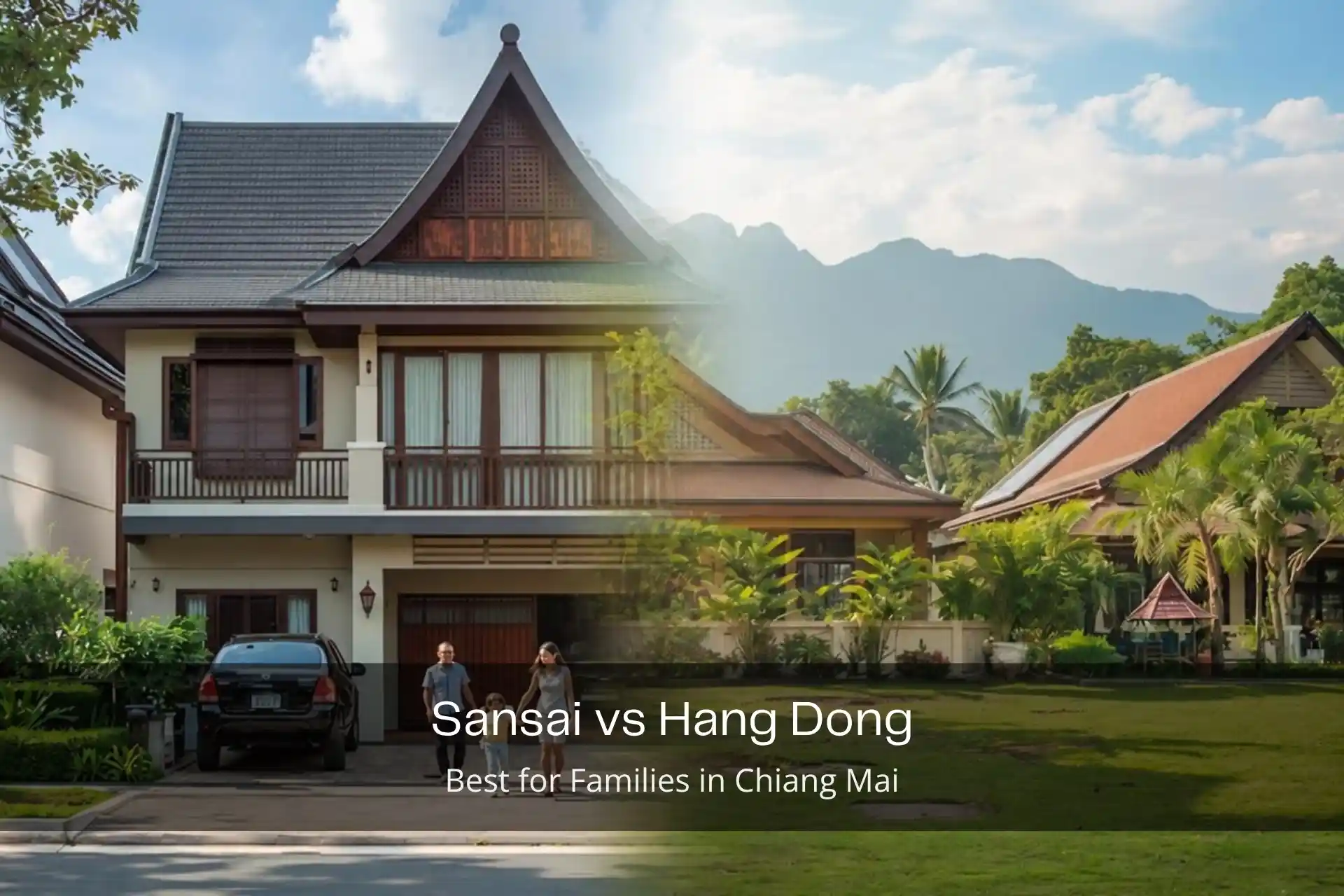
If you are weighing Hang Dong against the northern suburbs, we compare the two directly in Sansai vs Hang Dong. For the mechanics of the purchase itself, including ownership structure, see our villa buying guide.
What is daily life in Hang Dong actually like?
Comfortable, green, and thoroughly car-dependent. Everything a family needs is in the district, but almost nothing is walkable, and the balance between Thai everyday life and expat convenience shifts noticeably depending which sub-district you are in.
Kad Farang Village is the centre of gravity for most foreign residents, with a supermarket, cafes, clinics and the kind of Saturday-morning gathering point that makes a new arrival feel less unmoored. It is convenient rather than characterful, and we notice most families use it heavily for the first year and then less.
Ban Tawai is the district asset that rarely makes it into property listings, which we have always found odd. It is one of the most significant wood-carving and handicraft villages in northern Thailand, and it sits inside Hang Dong. If you are furnishing a house here, you will end up in Ban Tawai repeatedly, and it is a genuinely pleasant reason to live in this district rather than another one.
For everyday needs, Hang Dong Hospital covers routine care within the district, with the larger private hospitals in the city 25 to 40 minutes away. North Hill Golf Club sits inside the district for those who play. And in Nam Phrae, the flooded quarries known as the Grand Canyon Chiang Mai have become a genuine weekend fixture for families with older children.
The local markets are the part newcomers most often overlook and most come to value. Fresh produce in Hang Dong town costs a fraction of what the expat-facing supermarkets charge, and the gap between a household that shops locally and one that does not is easily 10,000 THB a month.
How bad is the traffic in Hang Dong, honestly?
Highway 108 is a genuine bottleneck between roughly 7:30 and 9:00 in the morning, and this is the single most common complaint we hear from residents. The rest of the day it is unremarkable, and there is a well-known way around it.
From most of Hang Dong you should budget 25 to 40 minutes to the Old City, 20 to 30 to Nimman, 15 to 25 to the airport, and 10 to 20 to Kad Farang or Central Festival. The airport figure is the one families underestimate. If you have relatives visiting regularly or a partner who travels for work, a fifteen-minute airport run is a quality-of-life factor that compounds quietly over years.
Learn the Canal Road, Highway 121, before you decide a house is too far from the city. Residents who commute daily use it to bypass the Highway 108 morning queue entirely. Drive both routes at 8am on a weekday before you commit to any address here.
On air quality, we will not pretend Hang Dong escapes it. Chiang Mai burning season, roughly February through April, affects the whole province, and no district here is exempt. Some sub-districts feel better on some days depending on wind and elevation, but we are wary of the confident district-by-district claims you will see elsewhere, because we have not seen data that supports them. What we can say is that newer builds in the district increasingly include filtration as standard, and that most established families here plan around those weeks rather than hoping for the best.
Why Hang Dong matters in 2026
Hang Dong land has risen roughly 15 to 20 percent over three years, driven by steady expat family demand rather than speculation. That makes it stable rather than cheap, and it is the closest thing Chiang Mai has to a predictable family-housing market.
Two things are shaping the district right now. The first is the Destination Thailand Visa. We have observed a clear pattern since it arrived: DTV families trial the city on a rental for twelve months, and those whose children settle into a Hang Dong school convert into buyers in year two. That pipeline is a large part of why family-home occupancy here stays high and why yields hold at 6 to 8 percent.
The second is Grace International moving to its new campus, which is quietly redrawing the map. Han Kaeo was not on most buyers lists three years ago. It is now.
One point on ownership, because we see it misstated often. The proposals to extend foreign leaseholds to 99 years and raise the condominium foreign quota to 75 percent are still proposals. They have not passed. As things stand in 2026, the enforceable limits remain a 30-year registered lease and a 49 percent condominium quota. Anyone selling you a Hang Dong villa on the basis of a 99-year lease is describing a contract, not a statutory right.
Who should not choose Hang Dong?
We would rather say this plainly than have someone buy the wrong thing.
If your child has a place at Prem Tinsulanonda, Hang Dong is the wrong side of the city. Look at Mae Rim.
If one parent works near the Old City, Nimman or the university and will do that commute daily, the northern districts will give you back an hour most days. That hour matters more than most people anticipate when they are still choosing from abroad.
If you want to be able to walk to a coffee shop, a bar and a co-working space, Hang Dong will frustrate you. It is a driving district. Almost everywhere here assumes a car or a scooter, and the sub-districts with the most appealing houses are the ones with the least within walking distance.
And if your budget is under about 5M THB for a purchase, you will find considerably more house for the money north of the city. Hang Dong land has risen 15 to 20 percent over three years, and that is reflected in what you get at the entry level.
Which international schools are located in Hang Dong district?
Three international schools sit within Hang Dong: Panyaden in Nam Phrae, Lanna International in Ban Waen, and Grace International in Han Kaeo. In our experience families underestimate how far apart these three are, at roughly twenty minutes between them.
Is Prem International School in Hang Dong?
No. Prem Tinsulanonda International School is in Huay Sai, Mae Rim, about 25km north of Chiang Mai and on the opposite side of the city from Hang Dong. Families with a place at Prem are far better served looking in Mae Rim.
Which Hang Dong sub-district suits families with young children?
San Phak Wan and Nong Khwai hold the strongest concentration of gated estates with communal facilities and settled expat communities. We have observed that families new to Thailand generally adjust faster in these two than in the more rural sub-districts.
Not sure which corner of Hang Dong fits you?
We live and work here, and we will tell you honestly if another district serves your family better. Browse our current listings or get in touch and we will map your school, budget and commute against the sub-districts that actually fit.
Chiangmai Properties. Mobile and WhatsApp: +66 64 338 9597. LINE: chiangmai-properties.
Disclaimer: We are real estate professionals sharing local market observations from Chiang Mai. This is not legal or financial advice. Property prices, school fees and commute times are indicative and subject to change. We recommend consulting a qualified Thai legal professional before any purchase, and verifying school places and fees directly with each institution.

%2520(1).webp)